Wednesday, December 28, 2011

No Room?

Here is one more story from the tsunami. This was passed along to me by missionary colleague, John Houlette, who helped clean the Matsukawa home of mold to prepare it for interior rebuilding. 

When the 311 earthquake struck, residents in a bay area city of Ishinomaki had precious few minutes to prepare for the tsunami that rushed ashore soon after. Mrs. Matsukawa managed to get herself and her elderly mother up to the second floor of their house before the wave arrived. From their bedroom window they watched the water wash large parts of their town away. People floated past their home. Many of them were soon overcome by the freezing temperature of the early March water. One elderly couple floated near enough for them to reach. The couple had been swimming hard and were completely exhausted. Mrs. Matsukawa called out encouragement, “Hang in there. It’s gonna be okay.” Then, with a small bit of makeshift rope (and no small bit of effort) she managed to pull the couple into her upstairs bedroom. The wife, however, had ingested too much debris-filled water and died on the floor. For five days the Matsukawas and this elderly man slept together in their upstairs room with the dead wife’s body. There was nowhere for them to escape to and no one had come to help.

Mrs. Matsukawa rescued others during those five days as well. Once, in the middle of the night, Mrs. Matsukawa heard a pounding on her window. She laughs now that her response to this knocking was to call out in a sweet voice, “Yes? Who is it, please?” A young mother in the neighborhood had paddled up to her window on a tree limb. When the tsunami struck, this young mother had a 4-year-old son in her hand and an infant strapped to her back. Both children were swept away. She alone was left clinging to a tree in a neighborhood yard. She pleaded for help to the family watching from the home. The family ignored her pleas and shut their windows. Mrs. Matsukawa, however, took this woman in. She piled layer after layer of clothing on the woman’s shivering body to warm her up. She shared the bit of chocolate snack she had left. She made room in her home, and in her already turbulent life, until help arrived days later.

Making Room
When I heard the story of Mrs. Matsukawa taking in a desperate young woman, and another neighbor rejecting the woman, I was reminded of the Christmas story. God was acting out of self-sacrifice and love; man was responding out of self-preservation and rejection. Although not a Christian, Mrs. Matsukawa certainly acted in a Christ-like way. Her neighbor, however, acted more like the innkeepers of Bethlehem. And lest we be too hard on the innkeeper, let’s remember that we, too, have more than once failed to give Jesus his rightful space in our lives. We, too, have unintentionally sent him to “the stable” of our lives on many occasions. 

Although this world and I fail at times to make room for the Son of God, I am thankful that my Savior made room for me: leaving the joys of heaven for the pains of earth, bringing me into relationship with the Father, preparing for me an eternal dwelling.

Our Savior still seeks room in the hearts of people. And the challenge of making room for Christ in my Bethlehem Inn-like heart is certainly reflected by how I make room for his people. None of those of whom God brings into my life will likely ever come paddling up to my window on a tree limb, but many are equally desperate. Although not a Christian, Mrs. Matsukawa certainly responded to the need around her in a Christ-like way. Her response challenges my heart. How about you?

Friday, December 2, 2011

The Humbled Tsunami

When the tsunami warning sirens went off, residents in a south Sendai neighborhood fled to the local school. Together with panicked children still in class they climbed to the rooftop. Some 600 altogether watched as the great tsunami of 311 surged ashore and crushed everything in its path, including a church several hundred feet away between themselves and the shoreline. The raging wave came to the very brink of the school roof, but rose no further. Aerial footage that day showed the group of traumatized survivors huddled together and completely surrounded by water. The tsunami had wiped out everything else. (See Google map of location)

The school roof had saved them. Or had it? Some residents had a different story: “When the tsunami came near that church, it fell to the ground. That was how Nakano Elementary school was saved. If the tsunami had flooded in as it was, all 600 people would have been swept away.” The Seaside Bible Chapel took the worst of the blow, shielding the school just enough from the full force of the water. The school roof refugees were spared. A resident commented: “God sacrificed His own temple to save the children.”

God sacrificing his own to save many. The story has a familiar gospel ring to it. Hasn’t God done the same for us, his children? He’s held back the full punishment headed our way and let it crush down instead upon His beloved Son. That's real salvation!

What’s more, He now humbles personal tsunamis in our lives daily. Most of the schooltop survivors probably overlooked a destroyed church as God’s way of holding back the full force of the waters so it would not overcome them. How easy it is for us, though, to miss God’s work. The storm obeys him. Waters are permitted only so far in our lives and no further: “When you pass through the waters, I will be with you. When you pass through the rivers, they will not flow over you.” Isa 43:2

The end? No, God still has good things for the seaside church. The cross was found among wreckage and placed atop a beam (photo above). There it speaks powerfully to the many people that pass by. In the last 8 months the church has seen more visitors coming to pray in that location than in all its years of existence. The church itself, the members, are meeting in a coffee house. The video clip here tells a little about the effective outreach God has given them already. God has his “Easter Sunday” good purposes in every “Good Friday” disaster!

Monday, November 21, 2011

Thanksgiving Chicken

It's not quite Thanksgiving, but our church ladies gathered today to learn a new way of preparing chicken. One of our church members has a large home that can accommodate 20 people in the kitchen at once (and a couple little dogs and American missionary)! Quite remarkable for Japan where most kitchens are smaller than a walk-in closet. And the kitchen always seems spacious compared to the bathroom. Which is a lot more spacious than the driveway (I am now fully qualified to park within centimeters of any fixed object). But I digress...

I marvel at the way that a simple cooking class can gather people together. Several of the ladies are not Christians, but find nothing uncomfortable about gathering for a Christian cook and his salvation testimony, and of course a great meal afterwards.

Now you might be wondering if the Lavermans celebrate Thanksgiving in Japan. The truth is that the holiday has escaped us uncelebrated more than once. Outside of American culture and away from the barrage of media and pushy retailing, we've simply forgotten about it. Besides, it would be tricky to cook even part of a turkey in the tiny fish fryer under the range (Japan's version of an oven). This year, however, we have our sights fixed on a run to Costco. Yes, they have a few of these American warehouse clubs here in Tokyo. And they sell pumpkin pie around the holidays. I might even break out the can of cranberry sauce smuggled from the States. Anyone want to send us onion rings for the bean casserole? Happy Thanksgiving, everyone!

Saturday, October 15, 2011

Merry Halloween?

It doesn't take long in Japan to discover that many holidays have crossed the ocean. One also soon discovers that the way these holidays are celebrated is very different than one's own experience. Japanese tend to be very eclectic, adopting a variety of styles, tastes and customs from many cultures, but always adapting them to suit their unique tastes. Borrowed holidays are a pretty "mixed up" affair here. 

This American foreigner was intrigued to discover that Japanese turned Valentine's day into two separate events in February and March, one for boys and another for girls. Christmas has nothing to do with the birth of Christ. And the Christmas cake, not ham or turkey, is the main eating attraction.

Several years ago Halloween began to become more popular in Japan. While I have mixed feelings about this holiday coming to Japan, it brings a flavor of home to see pumpkins and fall decor in stores. But I have to draw the line at the new greeting this year printed on Halloween goods and decorations everywhere: "Merry Halloween." I hope it is a one-year anomaly coming from some confused supplier somewhere in Asia, but I have the feeling it's going to become a fixed part of the local vocab.

I can see where this mixed up holiday trend is going in Japan. So someday when a Japanese wishes you a "Happy Christmas" in a card with a picture of a Mickey Mouse cake on it, you will know where it started.

Thursday, October 6, 2011

Returnees in Kanagawa (RIK)

Strange, but true, most Japanese become believers while outside their own country. Thousands of Japanese live abroad. Away from their home culture and its obligations and expectations, they are free to consider the faith of their host culture. They reflect on what is missing in their lives. They find meaning and purpose in attending a church. And Christ draws them to himself.

The difficulty comes after their stay abroad has ended and they return home to Japan. Often, Japanese "returnees" find it difficult to blend back into church life in Japan. Their experiences are not completely understood. The renewed pressures of reverse culture shock, family and work expectations, overwhelm their new faith. Many will fade away from church involvement. What a great loss to God's Kingdom in Japan! The church in Japan could be many times its 0.3% size if it were to hold the harvest that returns each year. 

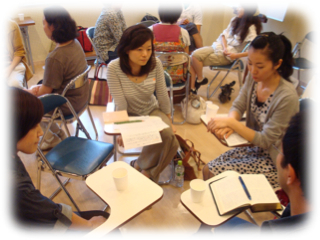
RIK (Returnees in Kanagawa) is a group of Christian returnees whose desire it is to change the above tragedy. We want to welcome back and strengthen returnees of all ages, and help them connect with a local church. Denen Grace Chapel is closely involved with RIK, with several of its members composing the core or helping in its meetings. We share the burden to care for returnees, as our own church has returnee members at its core.

RIK just had its second gathering event for returnees. Singing and small groups were a great blessing to the 40 returnees in attendance. We plan more such gatherings, in addition to casual recreational activities like BBQs and hiking together. We're not completely sure where God will take this newly-formed group of people, but we expect Him to work among us as we come together all across Kawasaki and Yokohama.

AND, we expect the need for RIK will grow. With the sharp, sustained increase in yen will come come increasing globalization of Japan's workforce. The Japanese diaspora will surely grow in the years to come, and so will the opportunity and need for returnee ministry.

Would you pray that God will use RIK to encourage returnees, regardless of whether they have yet made a decision yet for Christ, so that a great harvest of souls result, and the church in Japan would grow strong?

Wednesday, September 21, 2011

Can Japanese get their hope Bach?

Unintended missionary to Japan?
Who would have thought Bach would be involved in 21st century mission work in Japan? I have frequently read with interest of the strong connection between classical music (particularly J.S. Bach) and Japanese interest in Christianity. Japanese have great respect for beauty and culture, so this is no surprise. It seems God uses a variety of unusual evangelists and music genre to guide Japanese to himself. Gospel music, of course, is another boom. Read the following excerpt of a longer article available here:

No other country in the developed world keeps as many palm readers busy. None produces as much pornography; nearly half the worlds smut is made in Japan—and openly consumed in trains and subways. Suicide rates have risen from 23,000 in 1996 to 25,000 in 1997 and 32,000 in 1998. In that year, seventy–four children killed themselves in Tokyo alone, twice as many as in 1997. According to opinion polls, 60 percent of the population admit to being afraid every day. Most fear bringing shame on their families, teachers, or superiors by failing at work or in school.


What people need in this situation is hope in the Christian sense of the word, but hope is an alien idea here,
 says the renowned organist Masaaki Suzuki, founder and conductor of the Bach Collegium Japan. He is the driving force behind the Bach boom sweeping Japan during its current period of spiritual impoverishment. Our language does not even have an appropriate word for hope, Suzuki says. We either use ibo, meaning desire, or nozomi, which describes something unattainable. After every one of the Bach Collegium’s performances Suzuki is crowded on the podium by non–Christian members of the audience who wish to talk to him about topics that are normally taboo in Japanese society—death, for example. And then they inevitably ask me to explain to them what ‘hope’ means to Christians.”

Like Georg Christoph Biller, Leipzig’s current Thomaskantor and Bach’s sixteenth successor in that position, Suzuki sees himself as a missionary. 
I am spreading Bach’s message, which is a biblical one, he said, echoing the Swedish theologian and Lutheran archbishop Nathan Söderblom (1866–1931), who called Bach’s music the fifth Gospel. A member of the Reformed Church, Suzuki makes sure his musicians, mostly non–Christians, get that point. During rehearsals he teaches them Scripture. It is impossible to say how many of my performers and listeners will ultimately become Christians, ” Suzuki said. He believes, however, that Bach has already converted tens of thousands of Japanese to the Christian faith.